
Design for manufacturing guide
Undercut Machining Guide
What an undercut is in machining, which cutters and processes make it, and how to dimension undercuts so the part can be quoted and inspected.
Short answer
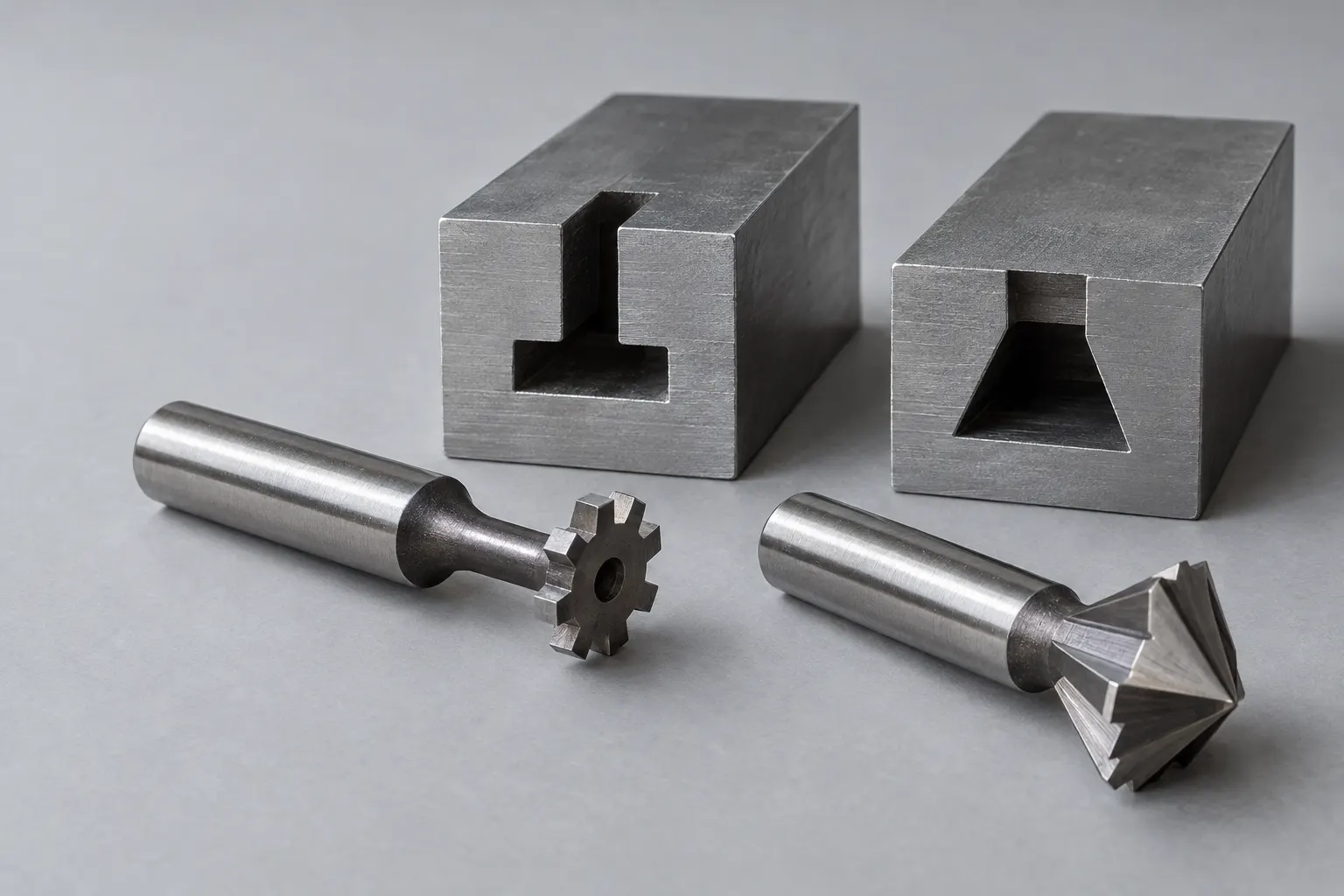
An undercut in machining is a recessed feature that a standard end mill or turning tool cannot reach from straight above or along its axis, such as a T-slot, a dovetail, an internal groove, or a relief behind a shoulder. Undercuts are made with special-profile cutters, extra setups, multi-axis machining, or EDM, so the drawing should define the shape the function needs and leave the rest open to the reviewer.
Undercuts are often added for good reasons: an O-ring groove, a retaining-ring seat, a thread or grinding relief so a mating part seats against a shoulder, a T-slot or dovetail that holds another part. They become expensive when the drawing asks for a shape no standard cutter makes, for a sharp internal corner where a tool must leave a radius, or for depth the tool neck cannot reach. Most undercut problems are solved at the drawing stage, before the quote.
Applicability
Undercut Machining use cases
Milled undercuts: T-slots, dovetails, keyseats and lips cut with T-slot, dovetail, keyseat or lollipop (ball) cutters.
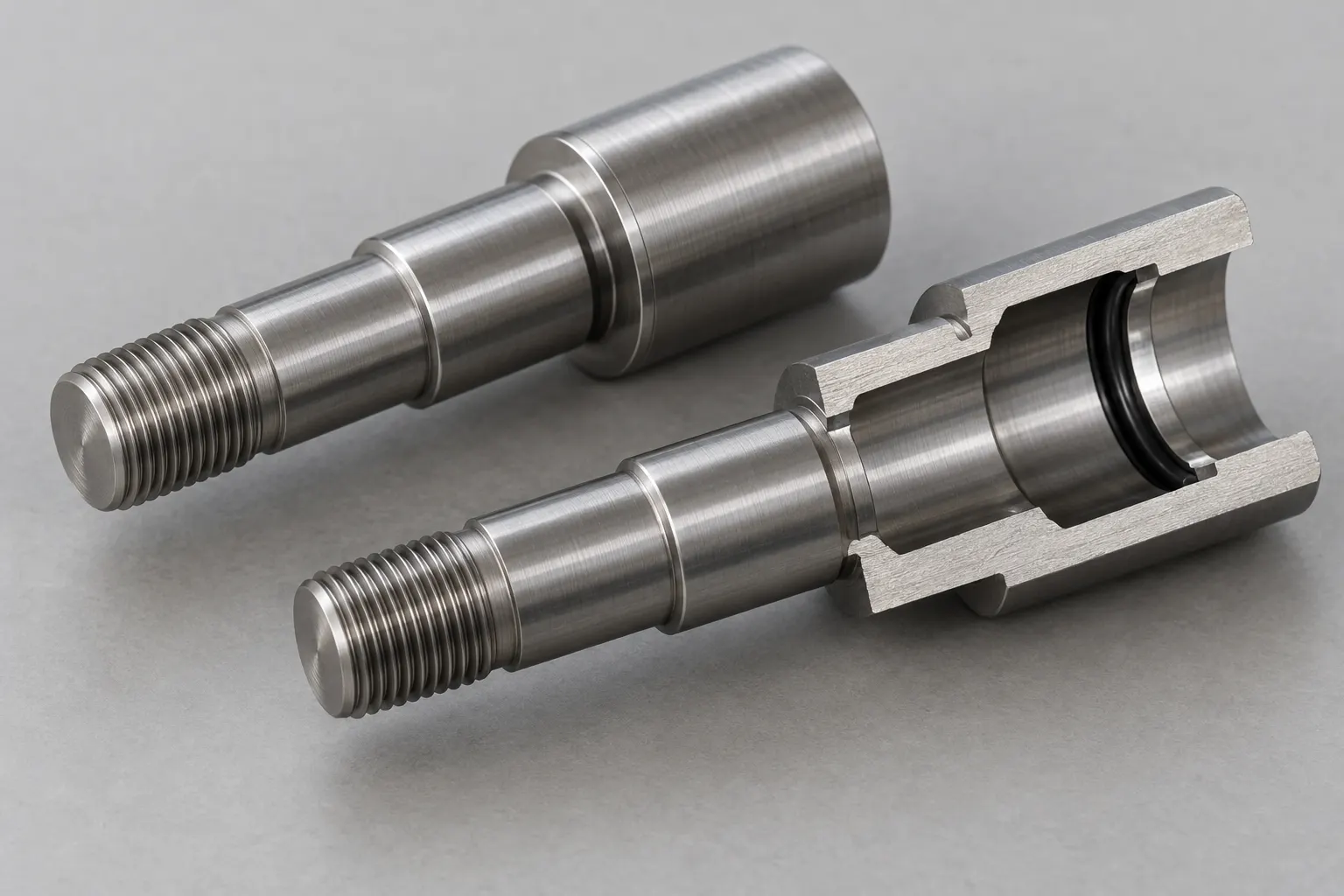
Turned undercuts: thread reliefs, grinding reliefs behind shoulders, and internal or face grooves for O-rings and retaining rings.
Hidden undercuts in housings and manifolds where a feature must be reached through a bore or from a second setup.
Undercuts in hardened tooling or narrow slots where wire or sinker EDM is the practical route instead of a cutter.
RFQ inputs
RFQ inputs and drawing requirements
Function of the undercut
Say what the undercut is for (seal groove, ring seat, relief, slide, retention) so the reviewer can tell which dimensions are critical and which can follow a standard tool.
Profile, depth and corner radii
Dimension the profile, depth and the internal corner radius you can accept; a radius that matches a standard cutter avoids a special tool.
Standard references
If the undercut follows a standard, such as a thread or grinding relief per DIN 76 or DIN 509, or a seal-groove standard, name it on the drawing.
Access and setup
Show the direction from which the undercut can be reached and any faces that must not carry tool marks, especially for internal undercuts.
Inspection method
State how the undercut is accepted: measured profile, gauge, or functional check with the mating part, because hidden undercuts are hard to measure directly.
Constraints
Constraints and quote assumptions
- Every undercut cutter leaves a radius or angle defined by its profile; perfectly sharp internal corners need EDM or a design change.
- Undercut cutters have thin necks, so depth and reach are limited and deep undercuts may need extra setups or a different process.
- Non-standard profiles may need a custom ground tool, which adds lead time and cost that a standard profile would avoid.
- Internal undercuts are difficult to inspect; without a stated method, the quote has to assume one.
Related manufacturing examples
Related manufacturing references

Grooved Ring Bushing
Grooved Ring Bushing shows turned grooves of the kind used for seals and retaining rings, where groove width, depth and corner radius need clear callouts.
Review reference
Slotted Mold Plate
Slotted Mold Plate illustrates milled slots and recesses where cutter access and corner radius decide whether a standard tool can be used.
Review reference
Cylindrical Sleeve Body
Cylindrical Sleeve Body is a reference for internal features reached through a bore, where inspection of hidden grooves must be planned.
Review referenceRelated pages
Continue the RFQ review
FAQ
Undercut Machining FAQs
What is an undercut in machining?
It is a recess that cannot be cut by a tool approaching straight down or along the part’s axis, because material above or in front of it blocks access. T-slots, dovetails, internal grooves, and reliefs behind shoulders are common examples.
How are undercuts machined?
With special-profile cutters (T-slot, dovetail, keyseat or lollipop cutters) on a mill, with grooving tools on a lathe, by machining from an additional setup or with multi-axis machining, or with wire or sinker EDM when the shape, material hardness or access rules out a cutter.
How can I make an undercut cheaper to machine?
Use a profile and corner radius that match standard cutters, keep the depth within what a cutter neck can reach, avoid sharp internal corners, and say which dimensions are functional. If a groove or relief follows a published standard, reference it instead of a custom shape.
Why do undercuts matter in injection molding as well?
In a molded part an undercut stops the part from ejecting straight out of the tool, so it needs a slider or lifter in the mold. Machined undercuts are a different problem: they are about tool access, not ejection.
Design for manufacturing guide
Define the undercut by its function, then quote it.
Send the drawing with the undercut’s purpose, profile, acceptable corner radius, any standard it follows, and how it should be inspected.
Start undercut RFQ